Showing posts with label Tutorial. Show all posts

Friday, March 30, 2018

Editting Overlapped Designs in Silhouette Studio for Cameo/Portrait

I’m a bit late with publishing this post because it took me forever to publish it to Youtube. So, without further ado, here’s the video.


I had an enquiry on how to cut overlapped design sometime back by one of my course participants so I made this video to explain better. The narration in the video is a mix of English and Malay so fellow Malaysians won’t find it strange. 

I am pressed for time so I might go back to the video later and add subtitles if I ever get the time.

So, I hope this video would help the newbies with Silhouette Studio to design and work better with the software.

A few announcements:

  1. My telekung class will be on tomorrow, 31 March 2018 at LamanSeni Zilakasim. Details about it here.
  2. I have been invited to take part in Jomoiling’s Live Your Passion Rally on 7 April 2018 at Lake Gardens. I will be bringing my NaturallyRozi’s products for sale on that day. Stay tune for more news.
  3. April’s Intensive Silhouette Training (read about it here)will be on Sunday, 15 April 2018 at The Craftsical. If you’re interested to join the class, please contact drop me a line in my contact form on my estore here.
OK, that’s all folks!

Saturday, March 25, 2017

Tutorial: Cameo3 Dust Cover


I finally managed to check Cameo3 dust cover off my to do list. I made mine from unbleached cotton drill and cut out some scrap HTV to decorate. It’s quite simple to make and here’s the tutorial if you want to make one for your Cameo.

You need:
3/4 yard or 3/4 meter of fabric
sewing machine
serger (optional)

Instructions:

From the fabric, cut one piece measuring 23.5” by 18.25”

Then cut 2 side panels. The template can be downloaded here. If you want to cut out the template, the studio3 file is here.Print in actual size. Use the 1” square for sizing gauge.


Line the short edge (front) of the side panel to the short edge of the main panel as shown in the picture below.


Mark 0.5” from the edge.


It should look like this:


Fold the side panel fabric where the marking is and snip the material. Be careful you don’t want to snip more than necessary. This snip will make pivoting the material easier later.


Once you’ve snipped it, it would look like this:


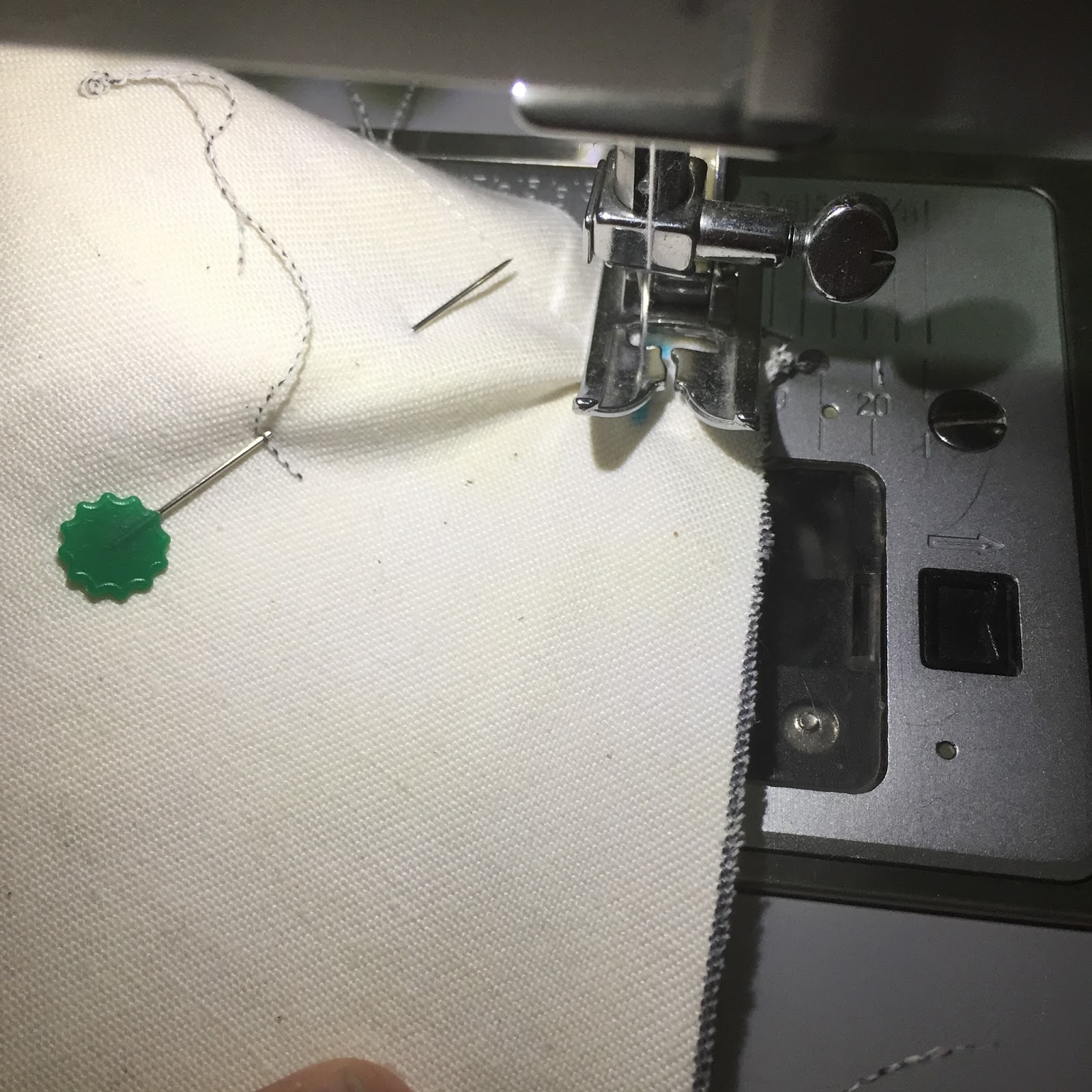
With 0.5 seam allowance, start stitching from the bottom until u reach the mark. Stop with the needle in the down position.


 Pivot the top material (side panel) so that the edge is lined parallel to the foot. At the same time, pivot the bottom material (main panel) so it’s in line with the top material.


The top part of the side panel is curved, so line both material and stitch them together; adjusting the back material to the curve. Continue until you reach the other 0.5” mark from the edge. Stop with the needle in down position and do the pivoting again.


 Continue down the side panel until you reach the edge and reverse stitch.


This is how it would look like. Repeat with the other side panel. IMPORTANT: make sure you check and double check that the side panels both face the same direction


I serged the seam:


I serged the bottom of the dust cover too:


On the wrong side, I fold in the edge 0.5” and pin it all around.


and stitch around the bottom of the dust cover. That’s it. Press and you have yourself a brand new dust cover.


 I made mine with unbleached cotton drill. You can dye the cover any colour you want or embellish it with applique or HTV like I did mine.


I even made the packaging for my dust covers with the sketch and cut function.

I hope the instructions are clear and easy to follow. Just drop me a line if you need any clarification. If you don’t sew, I can sew them for you. The introductory price is RM20. Please bear in mind that this pattern fits Cameo3. From what I heard Cameo3 is slightly bigger than its predecessors.

Next: Tutorial for Portrait Dust Cover

Monday, March 13, 2017

Cameo Tutorials on Youtube

Now that I am a non-exclusive distributor for Cameo and Portrait, I’ve been doing a few tutorial videos to help new Cameo/Portrait owners with their projects. You can check out my Youtube channel here. If you do check out my channel, I appreciate if you can click on “thumb up” and “subscribe”.  I’m still tweaking and feeling my way about in Youtube so bear with me.

Here is one to guide the new owners on how to register their Silhouette so they get the complimentary one month subscription worth USD25. That’s a lot of money in MYR


This is how I use Embrilliance software to create a cut file on Silhouette Design Studio for applique.


This is a video on pen holder/adapter. It’s included in the Cameo3 Crafter’s Bundle.


This is a tutorial for Etching Cream. 


Cutting Felt with Cameo:


Cutting a plastic sheet for a clutch template:


A sketch pen hack. How to make sketch pen fonts from normal fonts. I did this in English as it was requested by the group members of Silhouette Cameo Project Inspiration in Facebook after I showed them a video of my faux chalkboard writing on black card stock.


I’ll be adding more videos to my Youtube in the future. As most of my videos are intended for local viewers, the medium of delivery is Manglish (Malay and English combination). I plan to add English subtitle to my videos.

If you want me to do a demo video about cameo, let me know and I see if I can work something out.

By the way, did I tell you that my Portrait has a new friend? Yep, I got myself a Cameo3 last February. After all, I need it for class. There’s a new set of ball game especially with the dual carriage and the automatic blade. Love it!


Tuesday, January 3, 2017

Phone Pillow Tutorial


I made this phone rest aka phone pillow for a bazaar recently. However the sale was not so hot so I had a lot of ready made stocks. Luckily, my cousin bought the whole lot plus some more as gifts. That's my new year egg breaker. In case you are wondering, when I was in sales many years ago, my boss refers to the number zero as an egg. So, when any of our salesteam brings in the first sale, it means we've broken the egg, get it? Nevermind...

Anyway, since I have to make a few more to make up the order, I decided to take some photos and do a tutorial. This also serves as my reference source as I am really bad at keeping physical notes. OK, here goes:

Cut a rectangular piece measuring 8.5" by 6"

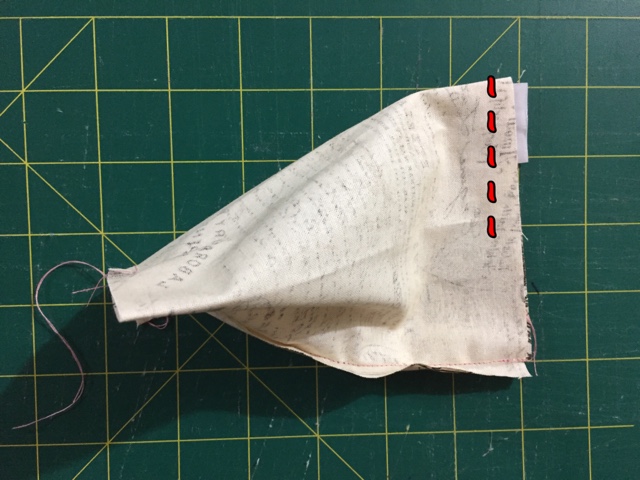
Fold the fabric together and sew a line down the short side (6" side) with a quarter inch seam.

Finger press the seam open. Position it so that the seam is in the centre and sew another stitch line on one side and leave an opening to turn later.

Turn your work onto the other side and now position the first seam line at the bottom and stitch pependicular to it leaving an opening to stuff it later.

Turn your work right side out and poke out all the corners. With the first seam facing down on the cutting mat, mark 1" and 1.5" from the edge and sew 2 parallel lines on ghat marking.

Stuff the 1" shell with fiber fill and hand stitch it close.

Stuff the other end of the shell and you will see how the piramid is taking shape. I add a few spoonfuls of fine pebbles for some weight. By the way, isn't the multicolour grain cute? Hand stitch the opening close and there you have it! Easy peasy lemon squeezy. 


I hope the instructions and pictures are clear enough. Do tag me on instagram (@madebyrozirahman) if you do make one following my tutorial. Good luck!

Monday, November 5, 2012

Tutorial: How to attach jumbo ricrac perfectly, every time

It's been ages since I last post a tutorial. So I thought I'd do a simple one on how to attach ric-rac, in my case onto a kitchen towel. I've been married for 10 years now and I'm lucky to have everything in the house ready at my disposal. I practically moved into our home with just a luggage. I never did buy a single kitchen towel ever since we got married so after 10 years, you would imagine that any kitchen towel in my possession looks more like a rag cloth than anything else. So I decided to make some new ones using some face towels that I found at IKEA for RM1.50 a piece.

So, back to my tutorial, the items that you need for a kitchen towel is:
1. 1 IKEA face towel (size: 30cm by 50cm or 12inches by 19 inches)
2. Cotton strip. I made mine 13inches by 4.5inches
3. Jumbo ric-rac. I use the 5/8inch wide


 On the right side of the cotton strip, pin the ric-rac along the long side; matching the bottom of the curve along with the bottom of the fabric.
Stitch over the ric-rac; I use my foot as a guide which is about 1/4inch from the edge and just about right in the centre of the ric-rac. Do it on both the long edge of the fabric.
Once you've attach the ric-rac as mentioned above, just turn the ric-rac over along the stitch line and TADAAA!!! there you have it, a perfectly even ric-rac edging. Just finger press it so it stays in place of if you really have to, run a low heat iron over the fabric. The ric-rac is made of polyester so it doesn't withstand high heat as cotton does.
 This is how it looks like on the other side.
 Place the cotton strip on the towel, perhaps 1to 2 inches from the edge, make sure you have cut your fabric to include the seam allowance on both ends. I made mine an extra 1" long so i can fold in 1/2in seam. Pin it in place like so.
 Stitch as close as you can at the edge of the fabric all round.
TADAA!!! there you have it. A pretty kitchen towel to brighten up any kitchen.
Don't just make one, make a bunch of it. A great way to use up all the scraps. A perfect house-warming gift and you can make some for Christmas sock filler.


Monday, February 6, 2012

Tutorial: Chalk Mat ver 1.1

I’m preparing some items for sale for my upcoming bazaar and made these today. They are chalk mat ver 1.1. The ver 1.0 is finished with bias tape on the edges. It’s nice but it gets dirty from the chalk dust. So the newer version, I took out the bias tape. Here’s the how to:

 Materials:
Oil cloth or laminated cotton measuring 13”x 16”
A scrap piece approximately 5” x 6” for the chalk pocket
Chalk cloth measuring 12” x 15”
Ribbon. I cut mine about 20” long


This is my machine setting:


Take the scrap piece for the pocket. Fold about 1/2” in and stitch. I used a zigzag stitch with the above setting.


Here’s how it looks like when finished.

The right side:

Fold the pocket piece into two and stich along the bottom of the piece (opposite the zigzag stitch made earlier)

Like this:

Turn right side out and keep it aside for later.

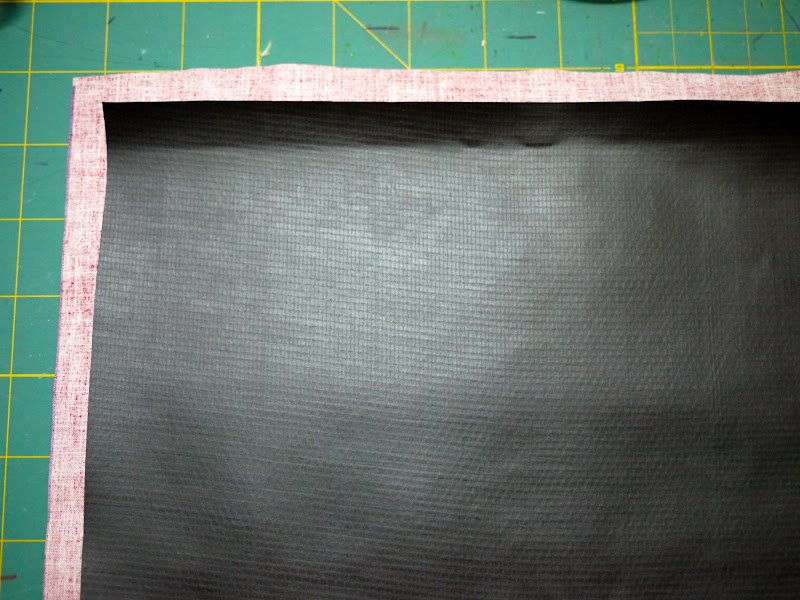
Lay the oilcloth right side down. Layer the chalk mat wrong sides together like this. You will have about 1/2” allowance as the oil cloth is larger than the chalk mat.

Fold in the long sides like this:

And stitch. You can you straight stitch. I used zigzag stitch. Repeat the process on the other long side.

Fold in the corner like this and pin in place:


Slip in the pocket about 1.5” to 2” from the bottom and pin in place. Stitch. Repeat on the opposite side.

Turn the chalk cloth on the right side. Mark the centre of the short side. Place the ribbon in the centre and stitch.

I went over it 3 times.

I finished the ribbon ends with fray check. Alternatively you can heat set it.
 
Stick a couple of chalks inside the pocket and TADAAA! you got yourself a chalk mat.

I hope the instructions are clear enough. Good luck and have fun with your chalk mats :)


Nuffnang